KNX, HD 384 and other words your customers do not search for
Technical trades describe their work in certificates and standards. Homeowners search in the language of problems. How a trade website can meet them halfway and keep its credibility.
The homepage of a good electrical contractor usually says things like certified KNX installations, compliance with ELOT HD 384, integrated building automation. All of it is true, and all of it matters. It is also almost exactly what a homeowner in Halkidiki does not type into Google at eleven at night.
What they type is closer to: lights flicker when the air conditioning starts, control heating from my phone, electrician for a new-build house Nea Moudania.
A trade website has to speak both languages: the language of the problem, so that people find it, and the language of the qualification, so that they trust it once they arrive.
Why the jargon wins by default
Trade websites are usually written by the people who do the work, or from a brochure written for other professionals — architects, developers, engineers. Those readers do search for KNX integrator. They are a real audience, and often a valuable one.
But a homeowner renovating a house does not know the word KNX yet. They know they want the shutters to close by themselves in August, and the lights to turn off when they leave. If the page never uses those words, the homeowner never finds out that this company is exactly who they need.
Writing for both, on the same page
- Start with the outcome, in plain words. "Control lights, heating, shutters and alarm from one app, at home or away."
- Then name the technology. "We install KNX, the open standard used for smart buildings, and we are certified to do it." Now the word means something to the homeowner, and the professional sees it immediately.
- Explain what the standard protects the customer from. A standard such as ELOT HD 384 is a promise about safety. Say that, in a sentence, instead of only quoting the number.
- Give each service its own page. Installations, security, automation and smart homes attract different people with different questions. One page each lets each page answer its own.
- Say where you work. Towns and areas by name. Local searches are local.
- Show the proof that is specific to you: year founded, certifications, the kinds of project you do.
How we approached it for an electrician
The Electrotechs website is for an electrical installation and automation company in Nea Moudania, Halkidiki, founded in 2012. The homepage puts three facts up front: the founding year, KNX certification and the ELOT HD 384 standard. Installations, security, automation and smart homes each stand on their own page. There is a quote request form, and the site was structured for local search in Nea Moudania and Halkidiki — and so that AI assistants answering questions about electricians in the area can find the facts plainly stated.
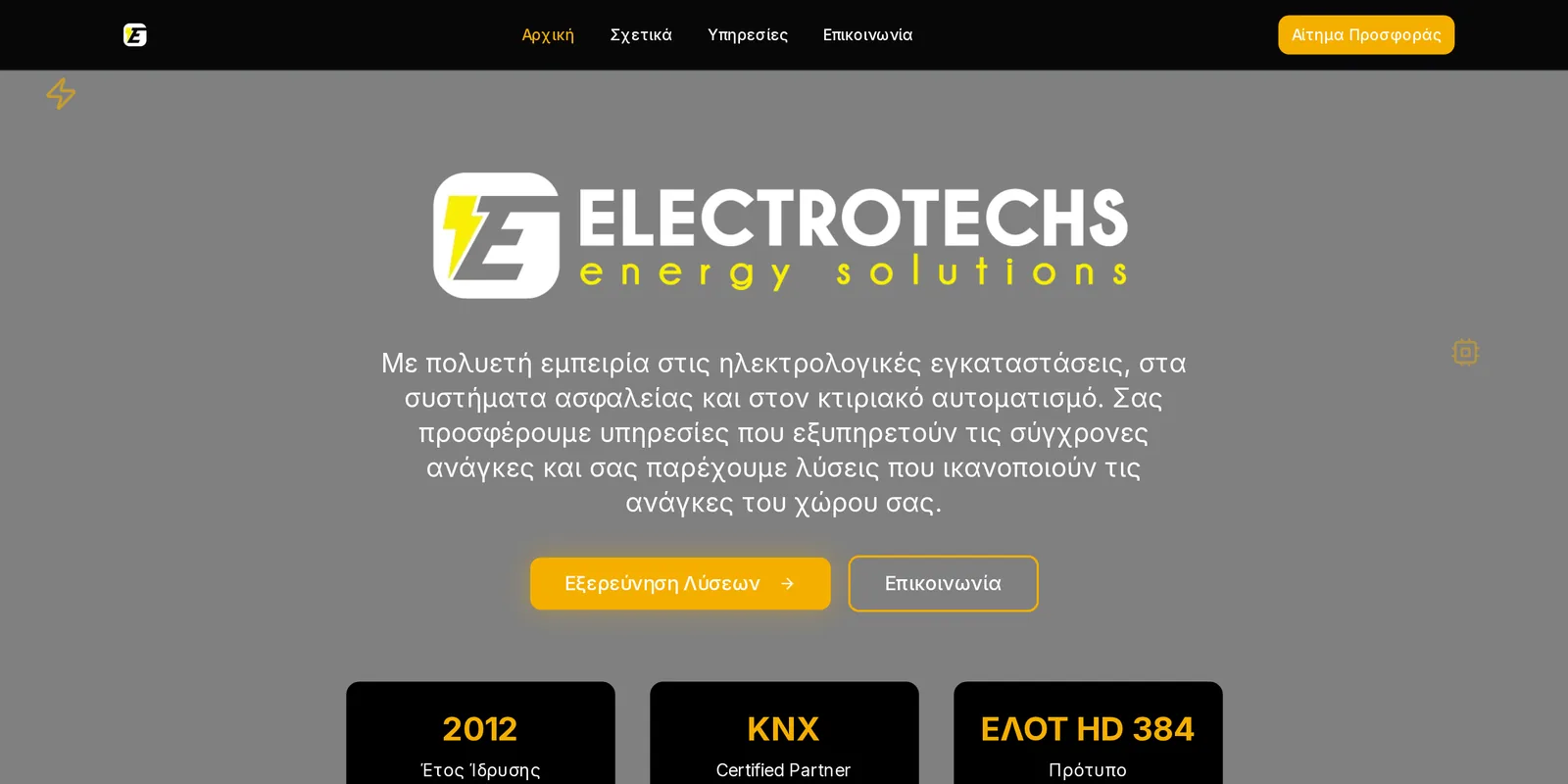 ElectrotechsAn electrician's website built to be found — by search and by AI assistants
The same balance applied to U-Play, which designs and builds children's playgrounds. Its buyers — hotels, schools, public spaces — care about safety standards, but they search for playground for a hotel before they search for a standard.
A quick exercise
Write down the last ten questions customers asked you on the phone, word for word. Then search your own website for those words. Every question that does not appear is a search you are not being found for — and probably a page, or a paragraph, worth writing. If you would rather we did the writing, get in touch.