The table for twelve that never came: reservations and no-shows at a taverna
A seaside taverna in August lives on its tables. A group that does not turn up on a Saturday night costs more than any other mistake. What to do about it without insulting regulars.
It is a Saturday night in August at a taverna by the sea. The long table at the front, the one with the view, has been set for twelve since eight. The booking was made by phone on Wednesday, by a man called Nikos, with a mobile number. At a quarter to ten, the number goes to voicemail. At ten, the waiter clears six places and seats two couples who have been waiting at the bar. The other six places stay empty for the best two hours of the week.
Nobody in hospitality needs this explained. The question is what to do about it, when the business also runs on regulars, on walk-ins, and on a culture where asking for money upfront for a dinner can feel rude.
Why tavernas are especially exposed
- Bookings are mostly by phone, written in a book, with a first name and a number, and no confirmation.
- The peak is very short. A seaside place may make most of the year's money in a few weeks, and most of each week's money on a few nights.
- Groups are the big risk. Two people not showing up is annoying. Twelve is a table you could have sold twice.
- Tourists book several places for the same night and decide later.
What helps, from lightest to heaviest
- Confirm the day before. A short message — "We look forward to seeing you tomorrow at 21:00, table for 12. Reply if anything changes." — catches a surprising number of forgotten bookings. It works better than a call, because people answer messages.
- Hold the table for a stated time. "We hold tables for 20 minutes" said at booking time makes clearing the table fair rather than awkward.
- Ask groups for a deposit, only at peak. Not every table, not every night. Large groups on Friday and Saturday in high season. A payment link sent by message is enough.
- Keep a note of who did not come. The next booking from the same number can be confirmed more firmly. That note should live in the reservation record, not in a waiter's memory.
- Take online bookings for part of the room. An online booking comes with a name, number and email by default, and can include the confirmation step automatically.
What a deposit changed elsewhere
We have seen what taking money upfront does to no-shows in a different seasonal business. At Mykonos Diving Center, close to a quarter of bookings used to not show up. After the reservation system we built started sending payment links from the booking itself, no-shows fell from 23% to 3%, and 68% of bookings were paid before the customer arrived.
A dive is not dinner, and a taverna will never prepay every table. But the mechanism is the same: a booking with something paid is a booking someone intends to keep.
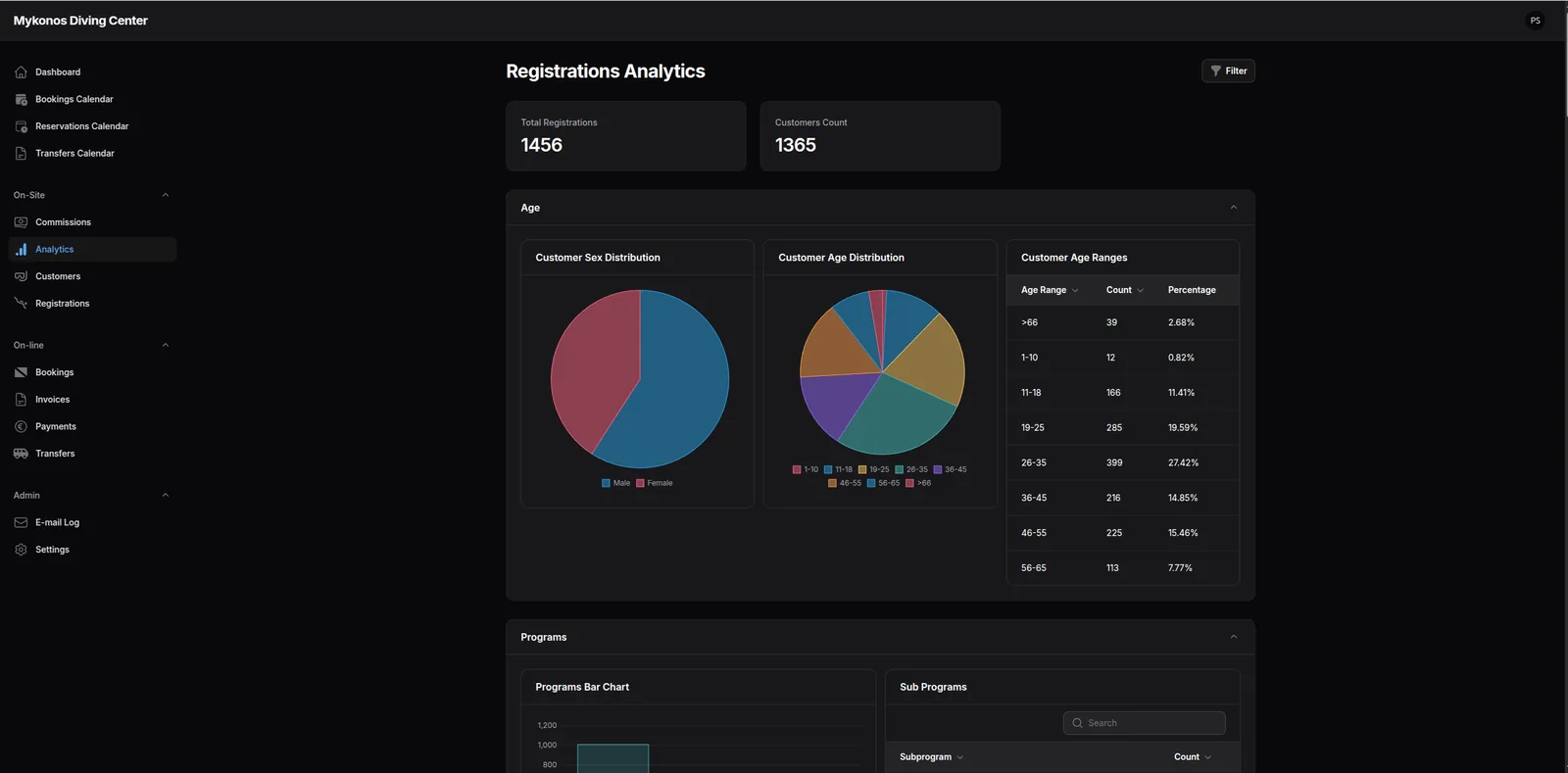 Mykonos Diving CenterReservations, payments and partner commissions in one system
The honest version
A neighbourhood taverna with regulars who have booked the same table every Sunday for years does not need deposits, and would lose goodwill by asking. A busy seaside place in high season, with group bookings and tourists, is a different business in August than in April. Tell us how bookings reach you now, and we will tell you what we would try first — often it is just the confirmation message.