A treatment plan patients can say yes to
Many dental patients leave with a verbal estimate and a lot of worry, and never book the next appointment. How a written plan, sent the same day, changes what they decide.
A patient sits up in the dental chair. The dentist explains: two fillings, a crown on the lower left, and at some point an implant where the old bridge is failing. There is a price for each, maybe written on the back of a card, maybe just said aloud. The patient nods, thanks the dentist, says they will think about it, and walks out.
Some of those patients book the next appointment. A lot of them do not, and not because they disagree. They went home, tried to remember what was said, could not explain it to their partner, and the whole thing turned into a vague, expensive worry that was easier to postpone.
What the patient takes home
At the end of a consultation about significant treatment, the patient is anxious, a little numb, and has just heard several unfamiliar words. What they retain is roughly: it's more than I thought, and there was something about a crown.
That is a poor basis for a decision worth hundreds or thousands of euros. It is also a poor basis for comparing you with a second opinion, which many patients now seek.
A written plan, sent the same day
The fix is not complicated, and it is mostly a habit:
- List each treatment in plain words. Not only the clinical term: "a crown — a cap that covers and protects a weakened tooth".
- Put them in order of urgency. What should be done now, what can wait a few months, what is optional. Patients are much more willing to start when they can see that not everything is due at once.
- Price each item separately, with the total, and say what is included.
- Say how payment works. Per visit, per stage, in instalments. The question "can I split it?" is often the real reason someone does not book.
- Send it by email the same day, so it can be read calmly at home and shown to a family member.
- Follow up once, a week later. A short message from the practice, not a sales call: "Did you have any questions about the plan?"
Keeping it in the patient's record
A plan sent from a personal inbox and a payment written in a receipt book are, again, two records that do not know about each other. The useful version keeps the plan, the appointments that carry it out, and the payments against it in the same place.
At Saridis Dental Clinic, the system we built holds patients, appointments, treatment categories, receipts and payments together, with a log of emails sent to each patient. That means the practice can see, for any patient, what was proposed, what has been done, what has been paid, and what was communicated — without asking anyone to remember.
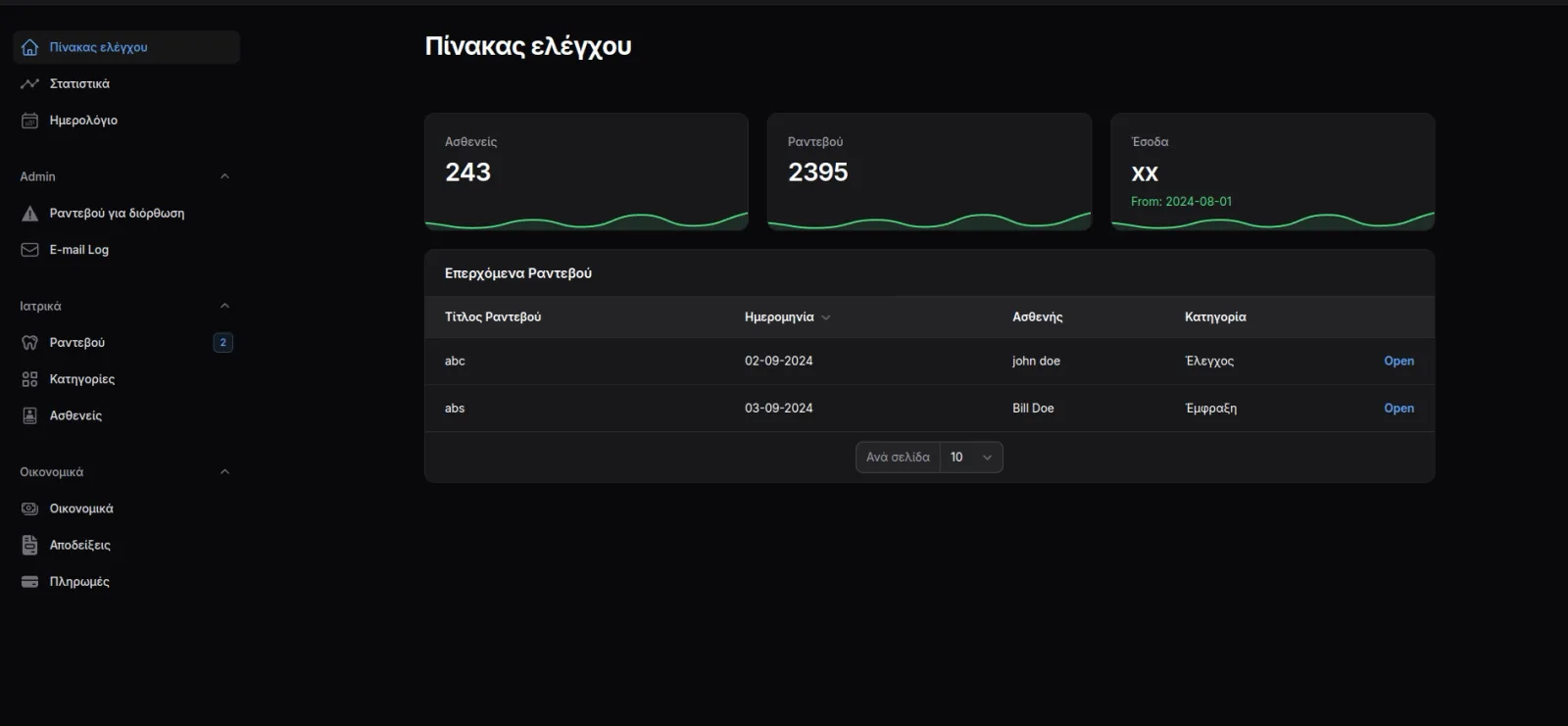 Saridis Dental ClinicA dental practice that stopped keeping two sets of books
A note on tone
A treatment plan is not a sales document, and it should not read like one. No discounts that expire on Friday, no pressure. Dental and medical ethics in Greece limit how practices may promote themselves, and patients can tell the difference between information and persuasion. The plan works because it is clear, not because it is persuasive.
The honest version
Some patients will not go ahead whatever you send them, for reasons that have nothing to do with the plan. But if your practice often hears "I'll think about it" and rarely hears back, the gap is probably between the chair and the front door. If you want to close it, we can help with the part that lives in the system.