Getting an online shop ready for its busy season, before it starts
A shop that sells for christenings and weddings earns most of its year in a few months. What to fix in February so the site holds up from May, using a christening shop as the example.
In Greece, christening season does not appear in any retail calendar, but anyone who sells christening clothes, candles or favours knows exactly when it starts. From spring into early autumn, weekends fill with baptisms, and the families organising them are shopping weeks ahead — mostly on their phones, mostly in the evening, often comparing three shops at once.
Swap christenings for weddings, school uniforms, ski gear or Easter, and the same pattern applies to a lot of small shops: most of the year's sales land in a few months, and the site has to be ready before they arrive, not during.
The shop that sells the way customers think
When we built the online shop for Paidiko Rantevou, a shop for christening and baby clothing, the most important decision was not the technology. It was the category structure.
A family preparing a christening does not think "girls' dresses, size 2". They think "we need the christening outfit, the set for the ceremony and the favours, for a girl". The shop was organised around that — christening packages, then girls' and boys' christening categories — which is how the shop sells in person, too.
Since launch, sales are up 40% and cart abandonment is down by half. I would not credit either number to one thing. But I am confident the structure mattered more than any single feature, because it removed the moment where a customer has to translate what they need into how the shop is filed.
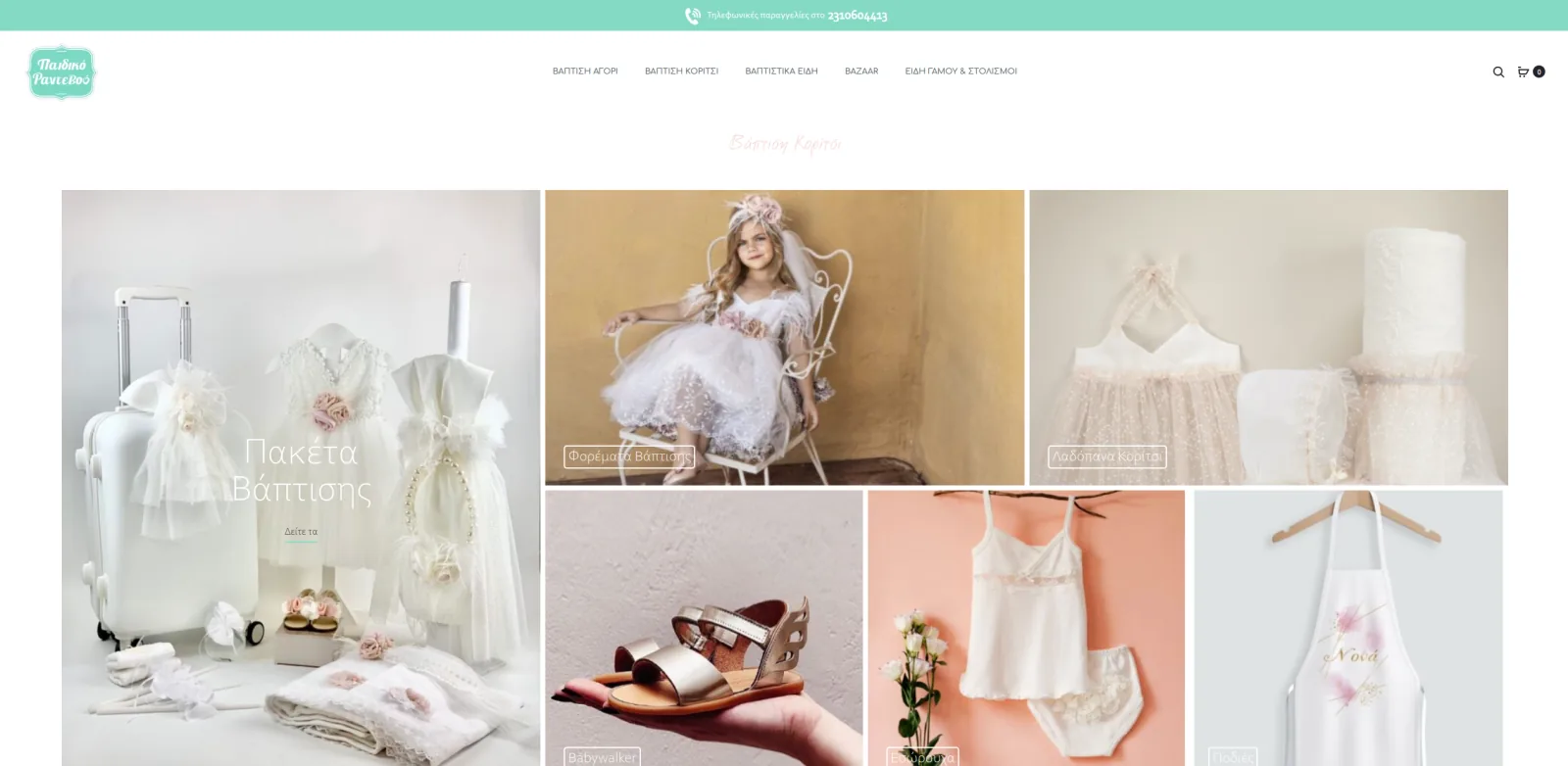 Paidiko RantevouA christening shop that survives its own season
What to fix in February
- Walk your top three journeys on a phone. For a christening shop: find an outfit for a boy, find a full package, and add favours. Count the taps. Anything above what you would tolerate in a hurry is too many.
- Check stock against reality. In the busy months, selling something you do not have means a phone call you will not enjoy making. Fix the process that keeps online stock right now, while nobody is ordering.
- Make phone and message orders part of the shop. A lot of Greek shops take orders by phone or Viber alongside the site. If those orders do not go into the same system, stock and sales numbers are wrong exactly when you need them. The Paidiko Rantevou shop was built to record phone orders for this reason.
- Test the slow bits under load. Search, filters and checkout are where a shop slows down first when many people arrive at once. A site that is fast on a quiet Tuesday tells you little about a Saturday in June.
- Answer the delivery question on the product page. "Will it arrive before the 14th?" is the question behind most abandoned carts in a date-driven business. Put delivery times where the customer is deciding.
Moving shops without losing the season
If your current shop needs replacing, the risk is the move itself: lost orders, broken links, a weekend offline. The Paidiko Rantevou migration was planned so that the shop never went down. That kind of move takes planning time, which is another reason February is better than May.
The honest version
Many shops do not need a rebuild. They need the five checks above, done honestly, and a couple of fixes. If you go through them and the list of problems is short, fix those and keep your money for stock.
If the list is long, or the shop simply cannot be organised the way your customers buy, send us a link and tell us which months matter.