Gym memberships that expire quietly, and the members who go with them
Most members do not cancel. They stop coming, their membership runs out, and nobody notices for months. How a small gym or studio can see it coming and do something about it.
Very few people walk into a gym and cancel. It is awkward, and there is always the intention of going back next week. What actually happens is quieter. A member misses a week because of work, then another, then summer arrives. The membership runs out at the end of the month. Nobody renews it, and nobody calls, because nobody noticed.
For a small gym or studio this is the biggest leak in the business, and it barely shows up anywhere. The member did not leave angry. They just faded out.
Why it goes unnoticed
In most small gyms, the information that would reveal it is spread across places that never meet:
- Attendance is a group chat, a sign-in sheet or the coach's memory.
- Payments are in a notebook, the bank app or the card terminal's history.
- Membership end dates are on a card in a drawer or a column in a spreadsheet nobody sorts.
Each one on its own looks fine. Put them together and you would see a member who came three times a week in March, once in April, not at all in May, and whose membership ends on the 30th. That is a phone call worth making. But nothing puts them together.
The signal is in the bookings
When members book their own class places, attendance stops being a guess. The class booking system we built for KeepFit gives every member an account and records every booked place, across up to twelve sessions a day. That record exists because the booking needs it, not because anyone had to fill in a register.
The same record answers questions a gym owner rarely has time to ask:
- Who has not booked anything in three weeks?
- Whose bookings dropped from three a week to one?
- Which memberships end this month, and are those people still coming?
- Which class times do members actually use, and which exist only on the timetable?
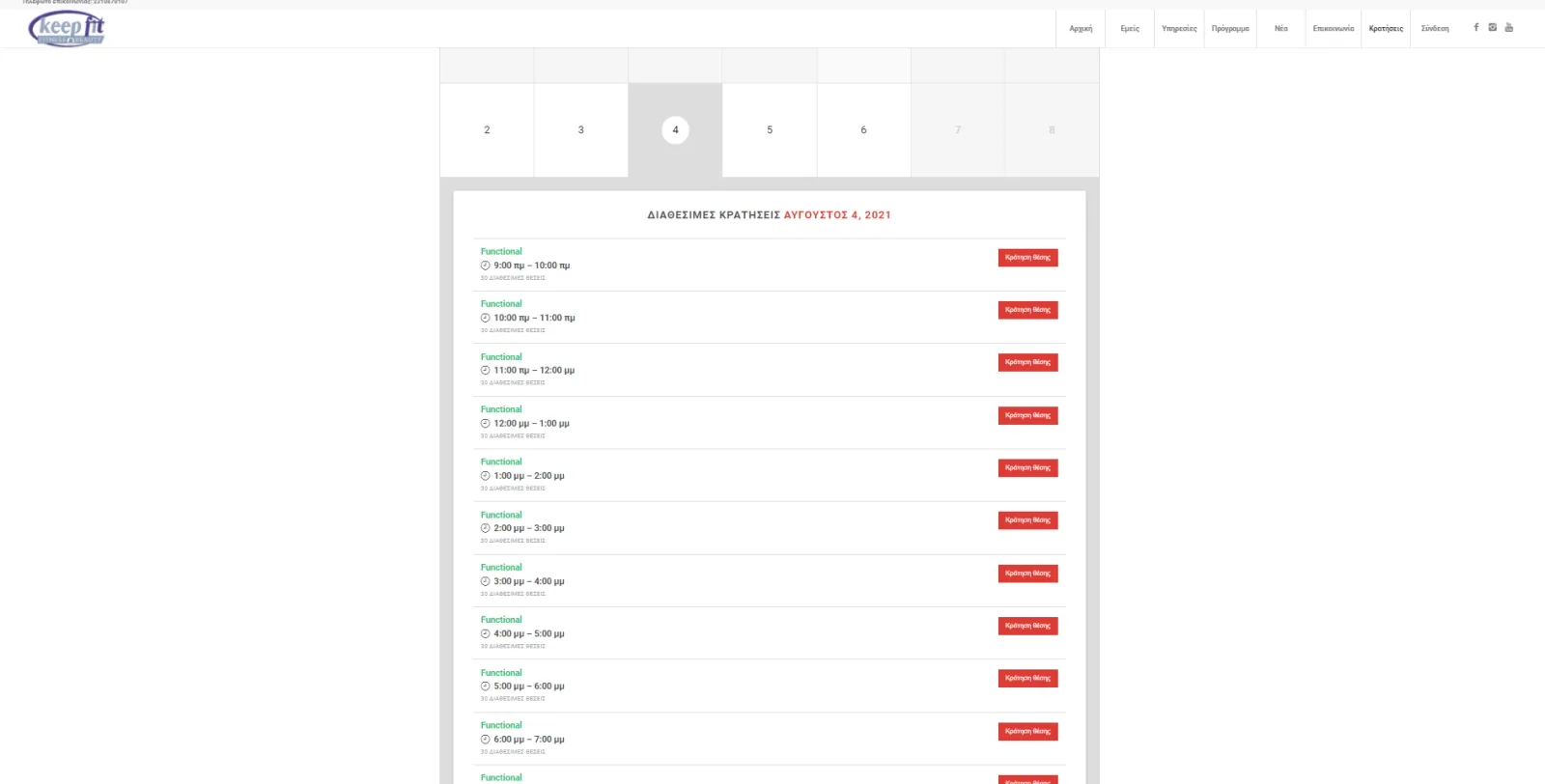 KeepFitClass booking for a gym that runs twelve sessions a day
What to do with it
The data is only useful if someone acts. For a small gym, the actions are simple and human:
- A weekly list of people who stopped coming. Five minutes on a Monday. A short, friendly message from the coach they know — not a marketing email.
- A reminder before a membership ends, not after. People renew more easily when they are asked while they still feel like members.
- An easy way to pause. A lot of cancellations are really "I'm away for July". A pause keeps the member; a lapse often loses them.
- A look at the timetable every season. Classes that are always half empty cost a coach's time. Move or merge them.
The honest version
If you have fifty members and you know every one by name, you are already doing this in your head, and doing it well. Keep going.
Past a hundred or two, nobody can hold it in their head any more, and that is when members start fading out unnoticed. Whether you need a ready-made gym app or something shaped around your own memberships and classes depends on how you sell — tell us how your members pay and book, and we will tell you which.