Two Easters, one booking calendar
Western Easter fell on 5 April this year and Greek Orthodox Easter falls on 12 April. For tourism businesses that means two weeks of demand, closures and questions.
Last Sunday was Easter for most of our visitors from Western Europe. This coming Sunday, 12 April, is Easter in Greece. In some years the two fall on the same day; in 2026 they are a week apart.
For anyone running a tourism business here, that week-long gap is two different holidays with two different kinds of customer, and a surprising number of questions from people who did not know there were two.
Why it matters for bookings
- Demand comes in two waves. Visitors from abroad booked for their own Easter holidays. Greek families travel for Orthodox Easter, often to villages, islands and the mountains, and often at short notice.
- Opening hours change around Greek Easter. Good Friday, Holy Saturday night, Easter Sunday and Easter Monday affect when shops, services, restaurants and transport operate. Foreign guests are rarely aware of it.
- Easter Sunday itself is a day of its own. Lamb on the spit, family tables, long lunches. Many restaurants are fully booked or run a set menu. Activity businesses may close, or open only in the morning.
- Prices and minimum stays are often different for Greek Easter week, and guests from abroad who see a different price for dates a week apart may assume a mistake.
What to put on your website this week
- A short note in English explaining that Greek Easter is on 12 April this year, and what that means for your business: closed on Sunday, open Monday, special menu, earlier last departure — whatever applies.
- Opening hours for the specific days, not "hours may vary".
- The same information in the booking confirmation email for anyone arriving between Thursday and Tuesday.
- Honest availability. If the booking form accepts requests for a day you are closed, it creates an apology you will have to write.
- A Greek version for Greek visitors, which will say different things: whether you serve Easter lunch, whether the Resurrection service nearby is within walking distance, whether there is parking in the village.
Holidays are just the clearest case
Easter is simply the most visible example of a broader rule: your site should answer the questions that are specific to these dates, not only the questions that apply all year. The same goes for 15 August, Kathara Deftera (Clean Monday), and local saints' days that close a town.
On the Olea Suites site, content is in both English and Greek throughout, and each suite page covers size, capacity and amenities — the stable facts. Date-specific notes belong next to those facts, and in the messages guests receive after booking.
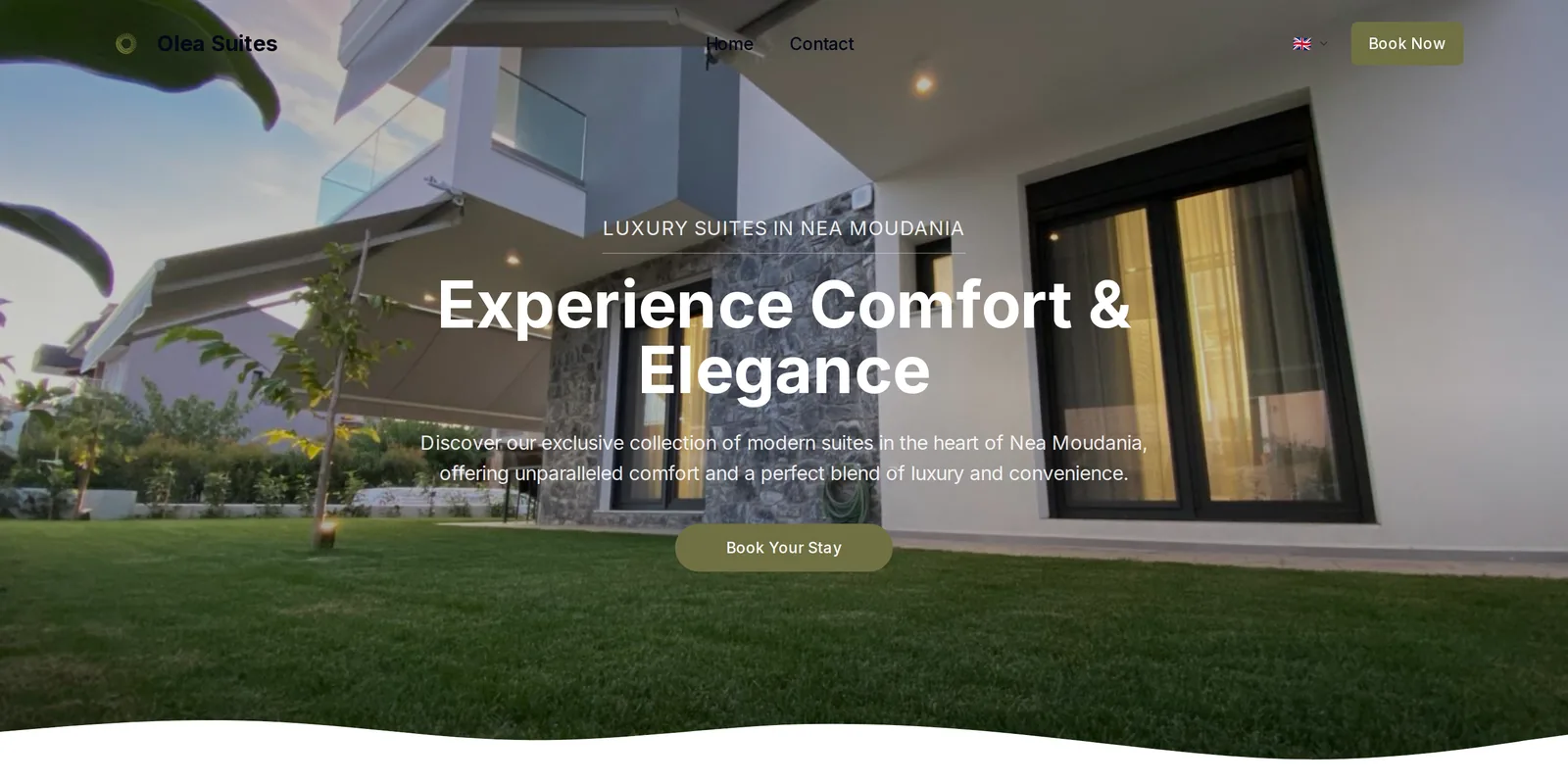 Olea SuitesHoliday suites that take booking requests on their own site, in two languages
On the Mykonos Diving Center website we rebuilt, 45% of bookings arrive outside office hours. A guest who is booking at midnight cannot call to ask whether you are open on Easter Monday. The website has to have already told them.
The honest version
This is a small thing to do, and most of it is writing, not software. It is also exactly the kind of small thing that shows a guest that someone is paying attention. If your site cannot easily carry a notice like this in two languages, that is worth fixing before the summer — let us know.
Καλό Πάσχα.