A clinic's stock room is a money problem, not a storage problem
Consumables that expire on the shelf, orders placed twice, supplier invoices nobody matched to deliveries. Why stock in a private clinic belongs next to the procedures that use it.
Walk into the stock room of most small private clinics and it will look orderly. Shelves labelled, boxes in rows, a list on the door. The problem is not what you can see. It is the questions the room cannot answer:
- How much of this do we use in a normal month?
- What expires before we will use it?
- Did we already order this from the other supplier last week?
- What did the materials for last month's procedures actually cost?
When those questions have no quick answer, the clinic pays for it in three ways that never appear on one line: expired consumables thrown away, rushed orders at worse prices, and a monthly result that nobody fully trusts.
Why stock is hard in a clinic specifically
In a shop, stock goes out when something is sold, and the sale records it. In a clinic, stock goes out when a procedure uses it — and the procedure is recorded by a doctor or nurse whose job is the patient, not the inventory.
So consumption is almost never recorded at the moment it happens. It is estimated at the end of the week, or discovered when a box is empty. Everything downstream — reordering, cost per procedure, supplier negotiation — inherits that guess.
Put the stock next to the procedure
The most useful change is conceptual: stop treating stock as a separate list, and connect it to the things that consume it.
In the KlinikiMitera system we built, suppliers and stock sit in the same system as patients, doctors, appointments, procedure types, the anaesthetist rota, and income and expenses. That is not about having everything in one screen for its own sake. It is so that a procedure scheduled next Tuesday and the materials it needs are part of the same picture, and so a supplier invoice lands next to the delivery it pays for.
The clinic reports paperwork down by around 90%, and no scheduling conflicts since the system went in. The stock room is quieter than either of those numbers, but it is where a lot of the paperwork used to be.
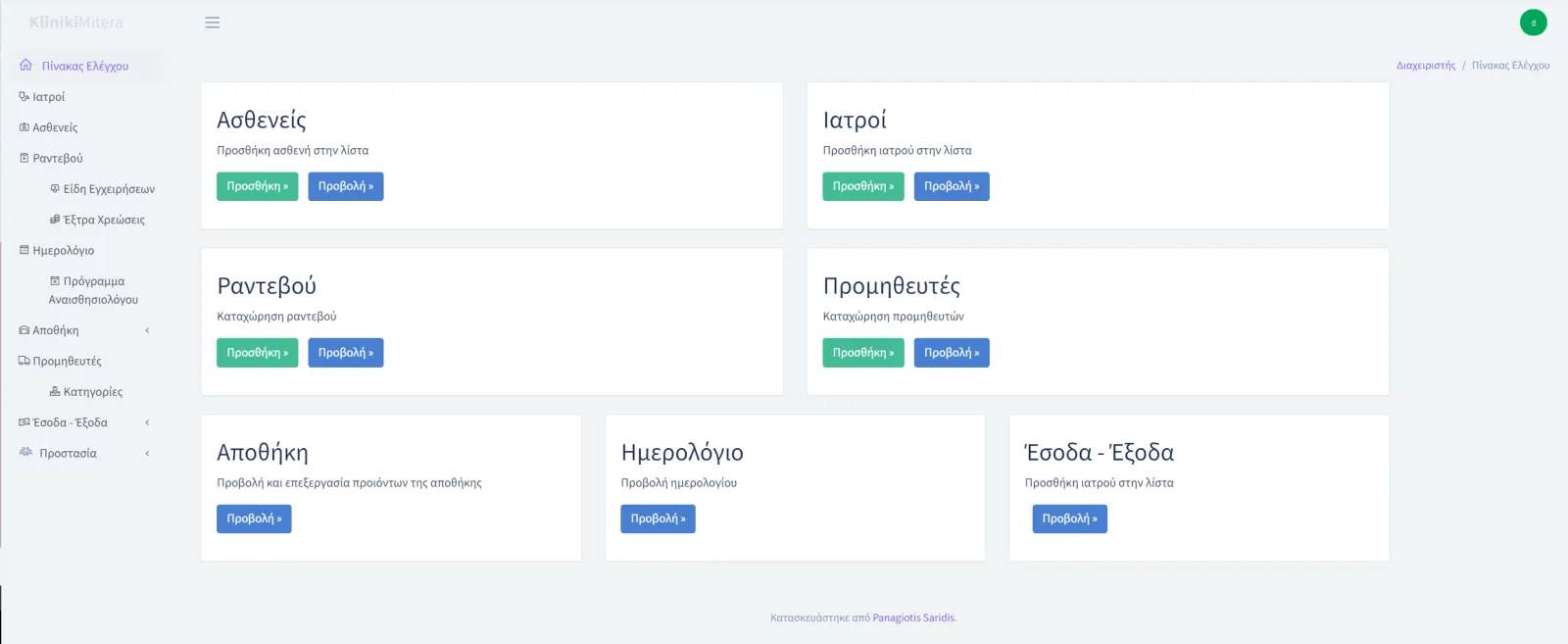 KlinikiMiteraClinic administration, from rota to stock room
Steps that help before any software
- Pick the twenty items that matter. Not every glove and swab. The expensive consumables, and the ones whose absence cancels a procedure.
- Record expiry dates when stock arrives, not when someone notices. First-expiry-first-out only works if the date is visible.
- Set a reorder point for each of the twenty. "When we are down to X, order Y." Written on the list, agreed by whoever orders.
- Match every supplier invoice to a delivery note before paying it. It catches more than you would expect.
- Once a month, compare what you ordered with the procedures you did. If the two do not roughly agree, something is being wasted, lost or not recorded.
When it is worth a system
A small practice with one treatment room can do all of this on paper or in a spreadsheet. A clinic with several doctors, operating theatres and a meaningful monthly spend on materials is where the gap between "procedure done" and "stock used" starts costing real money.
If that sounds like your clinic, talk to us. Bring last month's supplier invoices. They say more than any requirements document.