Before the guest arrives: the messages that save your reception an hour a day
Most questions a guest asks on arrival could have been answered a week earlier. What a small hotel, holiday let or activity business should send between booking and arrival, and in which languages.
A couple arrives at a small hotel in Halkidiki at half past three. At reception they ask: where do we park? Is breakfast included? What time is checkout? Is there a beach nearby with shade? Can we pay the balance by card? Behind them, another couple waits with the same questions.
Every one of those answers already exists. It is on the website, somewhere, or in the head of the person at reception. The guest simply did not have it before they needed it.
The window between booking and arrival is the most underused part of a small tourism business. The guest is excited, has time, and is reading everything you send. On arrival, they are tired, hot and have a car full of luggage.
What to send, and when
Right after booking — the confirmation. Dates, price, what is paid and what is not, cancellation terms, and how to reach you. Nothing else. Its job is to reassure.
About a week before — the practical message. This is the one that saves reception time:
- how to get there, with a map link and the last tricky turn described in words;
- where to park;
- check-in and check-out times, and what happens if they arrive late;
- what is included and what is not;
- how the balance is paid;
- anything they should bring or book in advance.
The day before — a short note. "We look forward to seeing you tomorrow. Check-in from 15:00. Call us on this number if you are delayed."
Paperwork can happen before arrival too
Registration forms, waivers, guest details, preferences and allergies do not have to be filled in at the counter. At Mykonos Diving Center, every diver has to register and sign a medical and liability statement. With the forms we built, customers open them on their own phone, choose one of six languages and their programme, and see only the questions that apply. They can do it while they wait — or the night before, from the hotel.
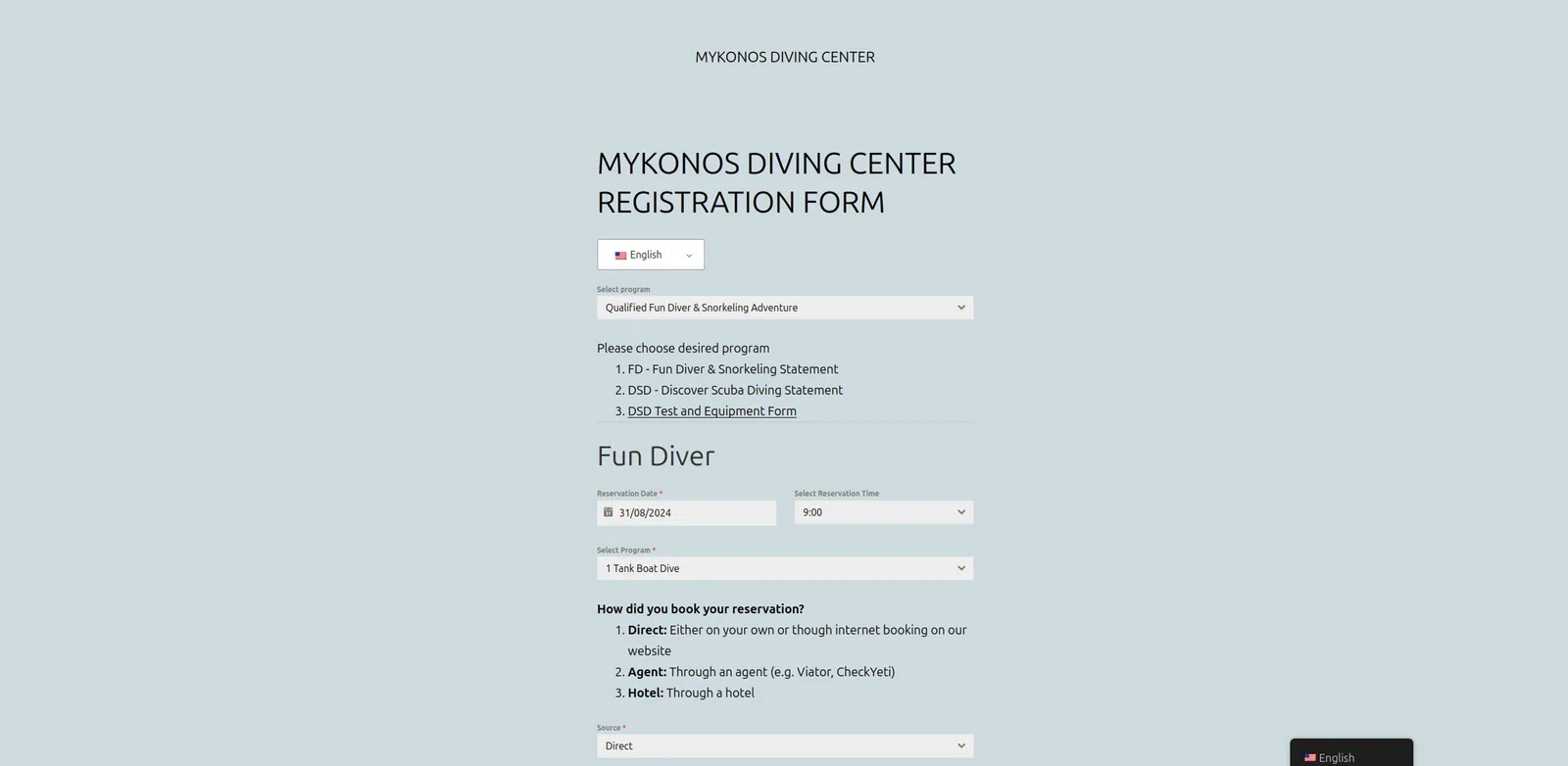 Mykonos Diving CenterRegistration and waivers signed on the customer's own phone
Language is not optional
If your guests come from five countries, the practical message should arrive in the language they booked in, or at the very least in clear English. The directions matter most: a guest lost on a mountain road will not be helped by a paragraph they cannot read.
The same applies to the website behind the message. The Olea Suites site is English and Greek throughout, so what the email links to is readable by the person who opens it.
Three things to avoid
- Sending everything at once. A single email with fifteen paragraphs gets skimmed. Split it by when it is needed.
- Attaching PDFs guests have to download on mobile data. Put it in the message or on a page.
- Upselling in the practical message. Offers have their place, but not in the email someone will open at a petrol station to find your address.
The honest version
This is mostly writing, and a lot of booking tools can send scheduled messages already. If you have not written these messages yet, that is the work — and it is worth doing before the season, while there is time. We wrote about what else belongs on that list in the summer season is decided in January. If your tools cannot send the right message at the right time, in the right language, talk to us.