Cash on delivery in Greece is not going away. Design your shop around it
Greek shoppers still ask to pay the courier. For an online shop that means refused parcels, delayed cash and extra fees. How to offer it without letting it eat your margin.
If you sell online to customers in Greece — whether your shop is Greek or you are selling in from elsewhere in Europe — you will meet a payment method that has faded in many other markets: antikatavoli, cash on delivery. The customer orders, the courier brings the parcel, and the customer pays the courier at the door.
A lot of online shop advice, written for other markets, treats this as something to phase out. In Greece, removing it usually means losing the customers who rely on it. It is part of how many people here are comfortable buying from a shop they do not know yet.
So the useful question is not whether to offer it. It is how to offer it without it quietly costing more than it earns.
What cash on delivery really costs
The courier's fee for collecting the cash is the visible part. The less visible parts are the ones that hurt:
- Refused parcels. A customer who has not paid has nothing to lose by not answering the door. You pay shipping there and back, and the stock is out of circulation for a week or two.
- Cash that arrives later. The courier collects the money and pays it to you on its own schedule. For a small shop in its busy months, that gap is real working capital.
- Reconciliation. Remittances arrive as totals. Matching them to individual orders is a job someone has to do, and mismatches are easy to miss.
- Fake or impulsive orders. An order that costs nothing to place is easier to place on a whim, or as a prank.
How to offer it sensibly
- Show the fee, early. If cash on delivery costs extra, say so on the product or cart page, not as a surprise in the last step. Surprise costs are one of the classic reasons people abandon a checkout.
- Confirm larger orders. For orders above an amount you choose, a short phone call or message before shipping catches most of the impulsive ones. It sounds old-fashioned. It is cheaper than a return.
- Keep a note of refusals. A customer who refused a parcel once can be offered prepaid methods only next time. Your shop should remember that, not a person.
- Make paying online the easy option. Card, IRIS or other instant methods, presented clearly, with the same delivery promise. Many customers choose cash on delivery simply because it is the first option they recognise.
- Offer pick-up points and lockers. A parcel waiting in a locker cannot be refused at the door in the same way, and many customers prefer collecting on their own schedule.
- Match remittances to orders automatically where you can. If your courier provides a file with the orders behind each payment, importing it beats ticking lines off by hand.
Where your shop fits in
Most of this is shop configuration and habit, not a rebuild. The part where a well-built shop helps is keeping everything in one place: the order, how it was paid, whether it was refused, and whether the money arrived.
When we built the Paidiko Rantevou shop, payments and phone orders were part of the same system as online orders for that reason — a shop with two sets of records has two sets of numbers.
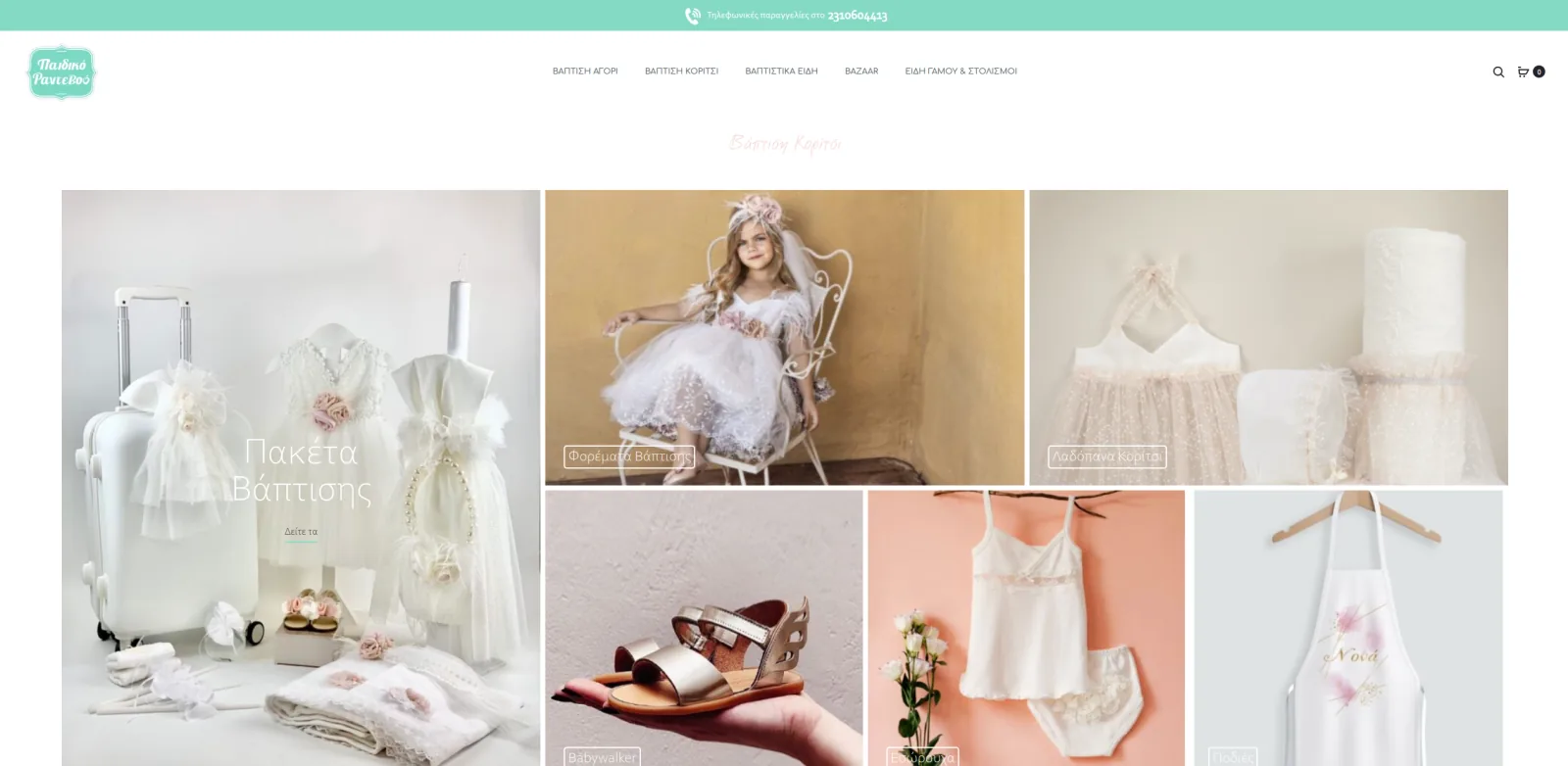 Paidiko RantevouA christening shop that survives its own season
The honest version
If cash on delivery is a small share of your orders and refusals are rare, leave it alone. If it is a large share and you do not know your refusal rate, find that number first. If you want help finding it, send us a link to your shop.