One stock for the shop and the e-shop
A shop that also sells online often keeps two stock counts: the shelf and the website. They disagree by Tuesday. What it costs to sell something twice, and how a small retailer can keep one number.
A customer walks into a children's clothing shop on Saturday morning and buys the last christening outfit in size 2. At lunchtime, another family orders the same outfit, in the same size, on the shop's website. The website still showed one in stock, because nobody had told it.
On Monday, the shop owner has to make a phone call that nobody enjoys.
This is the most common operational problem in small retailers that also sell online, and it grows with success: the more you sell in both places, the more often the two counts disagree.
Why two stock counts drift
- The till and the website do not talk. The shop's point-of-sale or invoicing software knows about the counter sale; the online shop does not.
- Phone and message orders go into neither. An order by Viber, set aside under the counter, reduces the real stock and neither system.
- Returns and exchanges are put back on the shelf, and not back on the site.
- Deliveries from suppliers are entered in one system, usually later.
- Someone "fixes it on Friday" by counting and updating the website by hand. By Monday it has drifted again.
What it costs
The obvious cost is the order you cannot fulfil: a refund, an apology and a customer who will probably not order again. The less obvious cost goes the other way: products that sold out on the website days ago but are sitting on the shelf, because a sale was recorded twice. Those are sales you never make, and nobody notices.
One number, updated where the sale happens
The goal is simple to state: one stock figure per product and size, and every sale reduces it at the moment it happens, wherever it happens.
In practice, that means one of three setups:
- The shop's till system is the source, and the website reads stock from it. Works well if your till software has a reliable connection to your online shop.
- The online shop is the source, and counter sales are recorded in it — on a tablet at the counter, for example. Simple, and very effective for small shops.
- A small system in between keeps the stock and updates both. Worth it when there are several shops, a warehouse, or marketplaces as well.
Whichever you choose, phone and message orders need a place in it. That was a deliberate part of the Paidiko Rantevou shop we built: phone orders are recorded in the same system as online ones, so they count against the same stock.
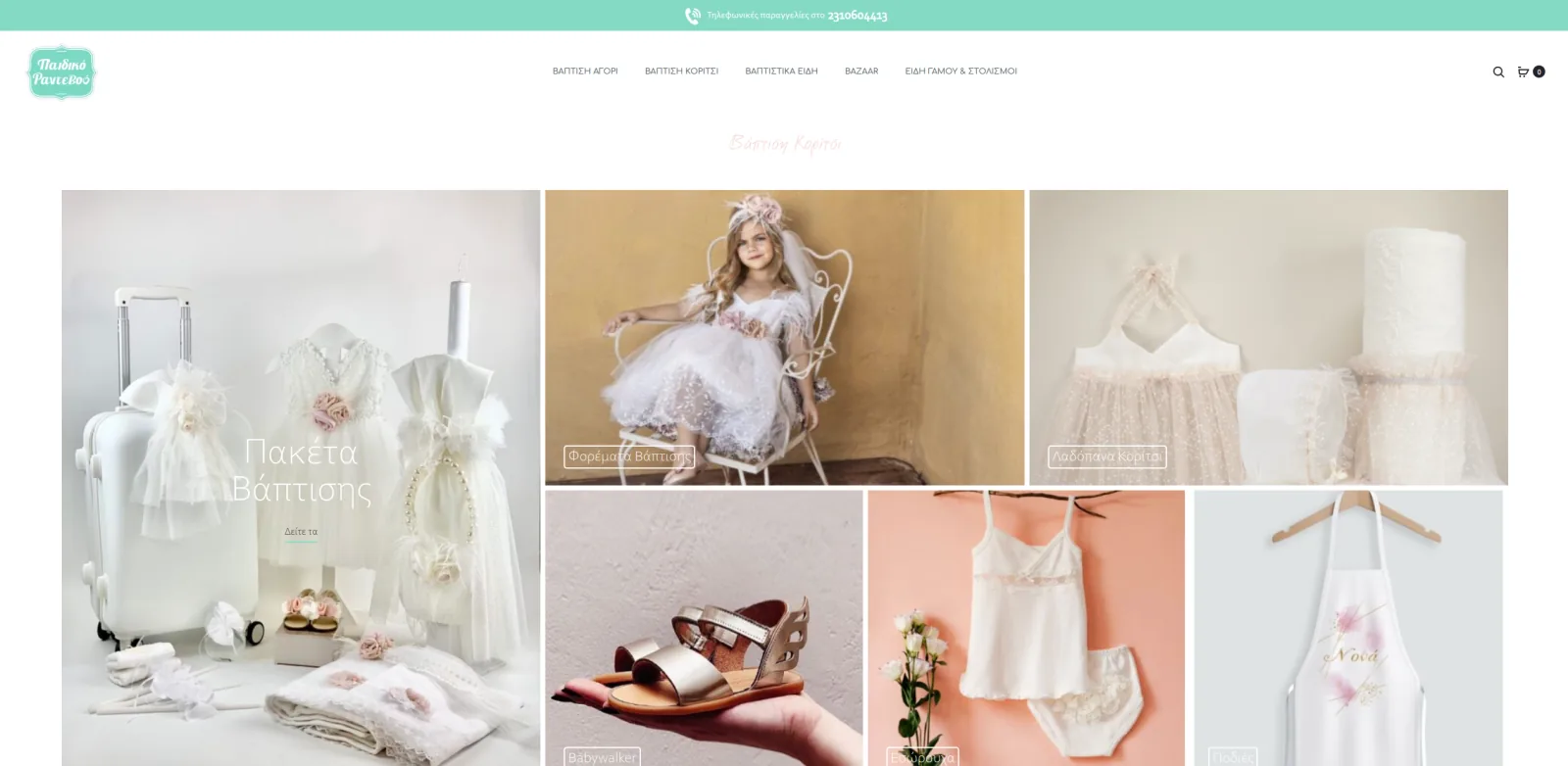 Paidiko RantevouA christening shop that survives its own season
Before the next busy season
We wrote in February about getting a shop ready for its busy season. Stock accuracy was on that list, and it is worth singling out: fix it in the quiet months, because the week you discover it is broken is always the busiest one.
A useful first test: pick twenty products at random, count them on the shelf, and compare with the website. If more than one or two disagree, the drift is already costing you.
The honest version
A shop that sells online only occasionally can keep "last one" items off the website and live with the rest. A shop that sells seriously in both places needs one number. Tell us what software your till and website use, and we will tell you which of the three setups fits.