Ski rental fleets are planned in August, not December
The decisions that shape a ski shop's winter — which skis to buy, which to retire, which sizes ran out — are made in summer. They are only as good as last season's records.
It is thirty-five degrees outside, and somewhere in northern Greece a ski shop owner is looking at a supplier's catalogue. Orders for next winter's rental fleet go in long before the first snow on Kaimaktsalan or Vasilitsa, and what gets ordered decides how the whole season goes: whether the family that walks in on the first busy Saturday finds boots in the right sizes, or leaves.
The question behind every line of that order is the same: what actually happened last winter?
What the shop needs to know
A good fleet order answers a handful of questions:
- Which sizes ran out, and when? Children's boots in the middle sizes running out over Christmas is a very different problem from adult skis sitting unused in March.
- Which pairs are near the end of their life? Skis that have been rented for several seasons, sharpened and repaired many times, cost more in service than they earn.
- Which models came back damaged most often?
- How many season-long rentals were there, and did they tie up kit the shop could have rented day by day?
- Who did not bring things back on time, and did it cost a rental?
If the rental records are a paper book and a card box, those answers are a few weekends of reading. More often they are a guess, and the order is last year's order with a few changes.
Tracked by the pair, not by the pile
The rental system we built for Sports&Ski records each rental down to the individual pair: brand, model, serial number and length, the boot and pole fitting, the dates, and the deposit and balance. The service calendar sits in the same place.
That level of detail sounds like overkill until August. Then it means the shop can see every pair's history — how many times it went out, when it was serviced — instead of estimating from memory. The shop reports around 23 hours less paperwork a week, and on-time returns up from 85% to 94%, because a rental with a date and a deposit attached is easier to follow up than a line in a book.
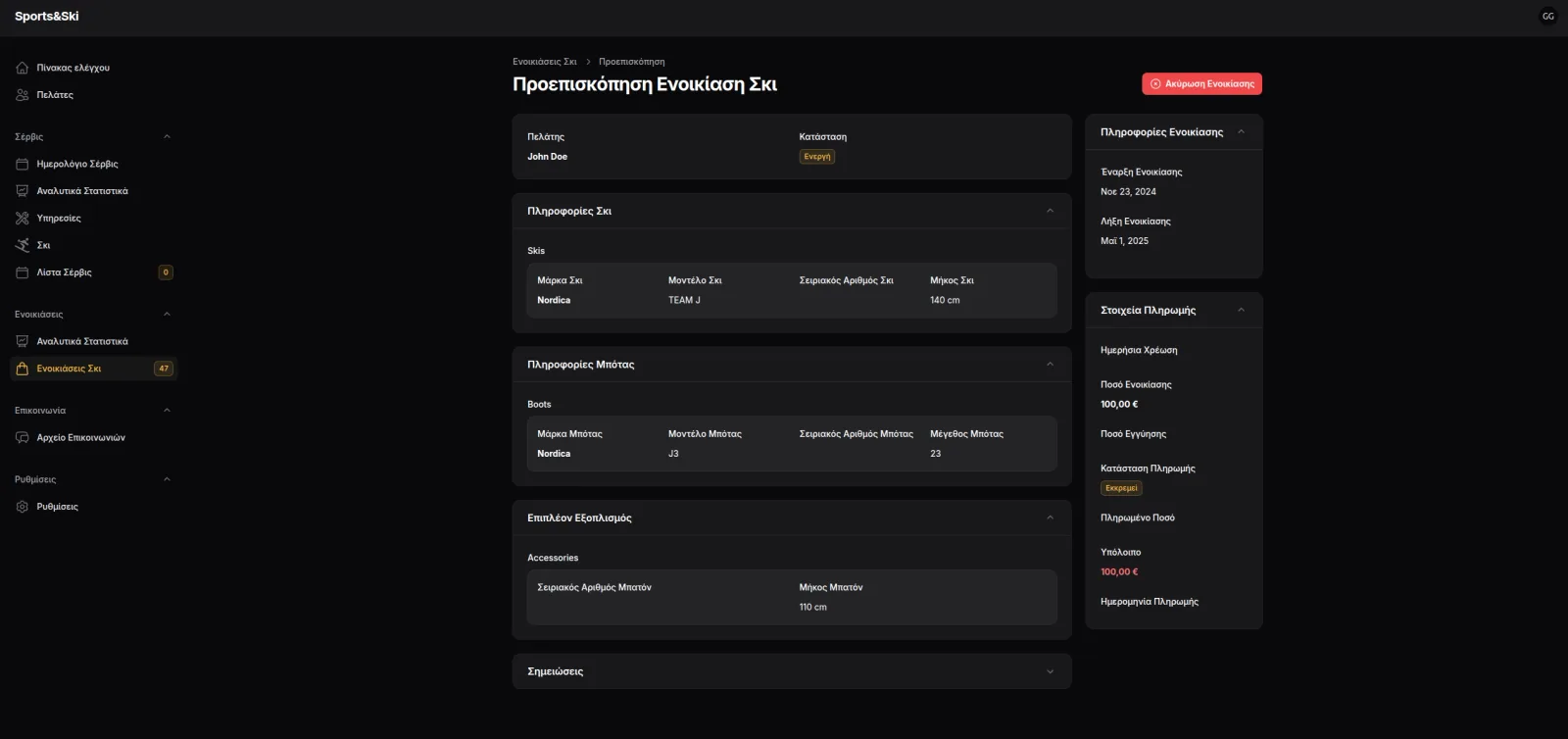 Sports&SkiRental kit tracked by serial number
Rentals and sales feed each other
A lot of ski shops also sell, and rental is where many customers first try the kit they eventually buy. Sports&Ski's ski test system turns a test into a priced offer by email, and the shop's conversion after a test went from 12% to 37%. The summer planning question includes that too: which models do people test and then buy, and are they in the test fleet?
A summer checklist for a rental shop
- Count what ran out, by size and by week, not just by season.
- List the pairs to retire, based on age and service history, before ordering replacements.
- Check your deposits and balances from last winter are all closed.
- Decide how you will record rentals this winter, if last winter's records could not answer the questions above.
The honest version
A small shop with a modest fleet and an owner who knows every pair does not need a system for this — the owner is the system. Once the fleet grows, staff change and the owner cannot be at the counter every day, the records are what the order is built on. If yours could not answer this summer's questions, now is the time to talk: there are four months before the snow.