Greece's digital client register is heading for gyms, salons and doctors
Garages and car rentals already report every customer to the tax authority before the work starts. Gyms, salons, physios and doctors are named as next. What it means if you run on appointments.
Since July 2025, a garage in Greece cannot simply take your car in and start work. Before the service begins, the business has to record the customer and the job in AADE's psifiako pelatologio — the digital client register — and get a registration number back. When the job is done, the invoice and the payment method are added to the same entry. Car washes, parking and vehicle rental work the same way.
For readers running a business here from abroad: AADE is the Greek tax authority, and this register is its tool for checking that every customer who walks in eventually matches a receipt.
The register is spreading. In January, the press reported that event businesses — wedding and christening venues, catering and event organisers — were due to join in the spring. The same reports named further sectors planned for 2026: gyms, dance schools, beauty centres, hair salons, physiotherapy practices, doctors, lawyers and notaries. By early July the events sector was still described as being prepared, so treat every date as provisional until a formal decision is published.
Why appointment businesses should pay attention now
The rule for vehicles is that the entry happens before the service starts. If a similar rule reaches gyms, salons and practices, the register stops being paperwork done at the end of the day and becomes something that has to happen at the door, for every customer, in real time.
For a business that already works from appointments, that raises a simple question: where does the customer's information already live?
- If bookings are in a paper diary, every entry will be typed into the register by hand, at the counter, while the next customer waits.
- If bookings are in a system, the details are already there. The question is whether that system can send them, or whether someone retypes them.
Typing it twice is the real cost
The register is filled in through AADE's own tools or through commercial software that connects to it. I am not going to guess the final technical rules for sectors that have not been formally included yet. But the pattern from every Greek digital reporting obligation so far — myDATA, the digital work card, now this — is the same: businesses whose records are already digital adapt with a setting or an update. Businesses on paper get a new daily chore.
When members of a gym book their own class places, as they do on the KeepFit booking system we built, the customer and the time are known before anyone walks in. When an event sells tickets online, as the Chalet Voras ticketing does, the list of attendees exists before the door opens. That is exactly the information a register entry asks for.
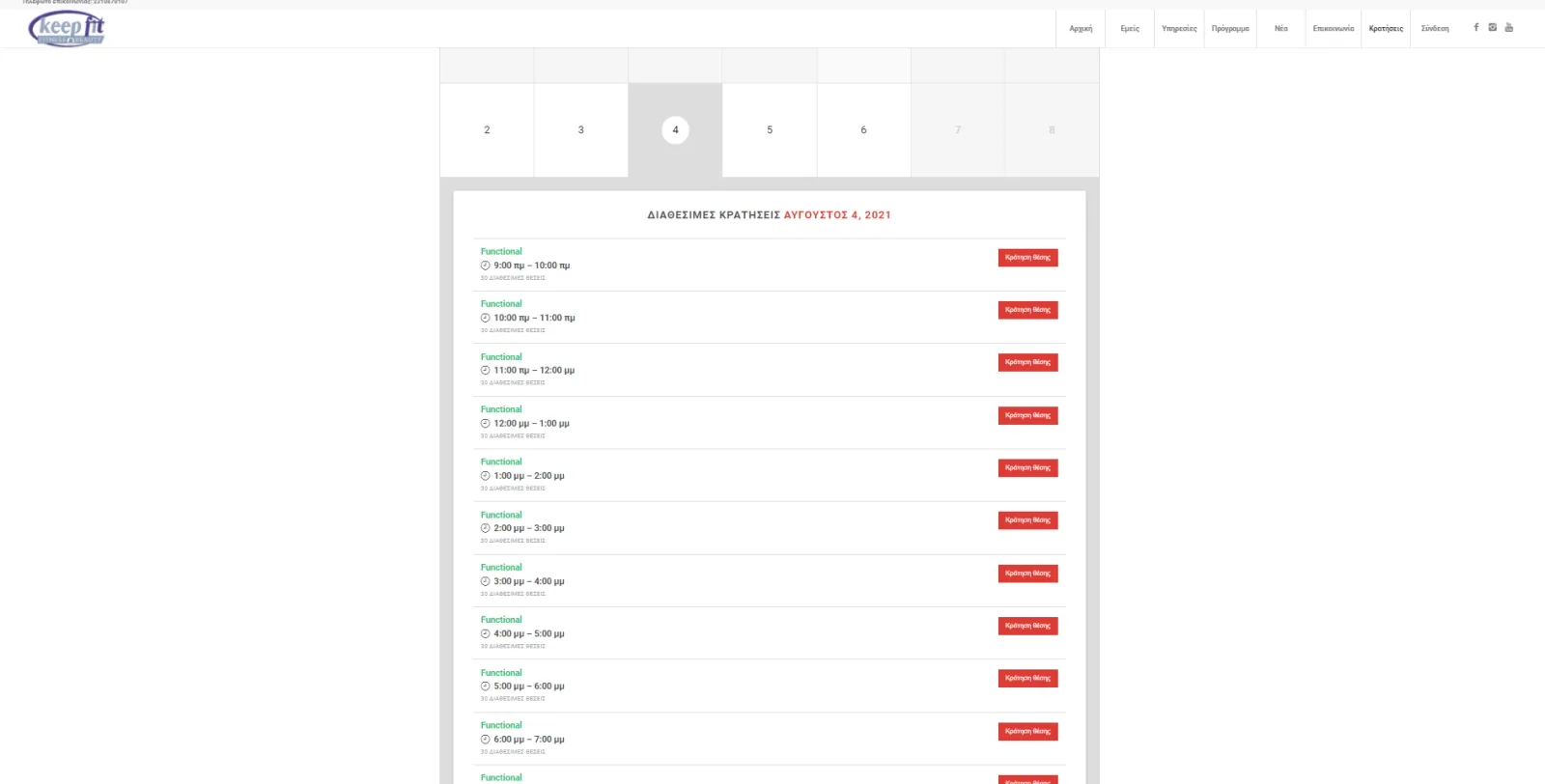 KeepFitClass booking for a gym that runs twelve sessions a day
What I would do this year
- Ask your accountant whether your activity code (KAD) is on the list, and to tell you when a decision is published.
- Look at how customers are recorded today. If the answer is "the diary" or "we don't", that is the part to change first, register or no register.
- If you use booking or practice software, ask the provider whether it plans to support the register, and how.
- Don't buy anything yet on the strength of a press report. Wait for the decision and its technical specification. Just make sure you are not starting from paper when it arrives.
The honest version
This is a tax obligation, and the details belong to your accountant. What we can help with is the part before it: getting bookings, customers and attendance out of notebooks and into a system that can talk to other systems — so that when the register reaches your sector, it is an update, not a new job. Tell us how customers are recorded today.