Island clinics in August: patients who speak five languages and carry travel insurance
A private medical centre on a Greek island can see more patients in August than in the rest of the year, mostly tourists. Forms, languages and insurance paperwork set the pace.
A private medical centre on a busy Greek island in August sees a very particular kind of day. A Dutch child with an ear infection. An Italian diver with a cut foot. A British couple after a scooter fall. A German pensioner who needs a prescription renewed. Many of them hold travel insurance, and most of them do not speak Greek.
The clinical work is what the doctors trained for. What slows the day down is everything around it: registering each patient, taking a history in a language nobody at reception speaks, and producing the paperwork an insurer abroad will accept.
Where the time goes
- Registration at the desk. Name, date of birth, address at home and on the island, phone, insurance details — spelled out letter by letter across a language barrier, while the waiting room fills.
- Medical history in the wrong language. Allergies, medication, previous conditions. The questions matter, and a misunderstanding is not a paperwork problem.
- Insurance documents. Patients need an itemised invoice and a medical report, often in English, to claim the money back. Written by hand at the end of a long day, they are slow and inconsistent.
- Follow-ups nobody tracks. "Come back in two days to change the dressing" — and the patient's hotel, phone number and departure date are on a sheet of paper.
What helps
- Let patients register on their own phone. A QR code at the entrance, a form in their language, the same fields every time. Staff check it instead of typing it.
- Ask the history questions in the patient's language, with answers stored in the language the doctor reads.
- Generate the insurance paperwork from the record: patient details, services, prices and the doctor's note, in English, as a PDF, ready to hand over or email.
- Record the follow-up with the departure date, so the centre knows who should come back before they fly home.
What we have built that fits
At Mykonos Diving Center, every diver must register and sign a medical and liability statement before going in the water. Customers open the form on their own phone, pick one of six languages and their programme, and see only the questions that apply. Every submission is also copied to a spreadsheet as a plain backup.
That is not a clinic, but it solves the same problem: medical questions, answered accurately, by people who do not share a language with the staff, at the busiest hour of the busiest month.
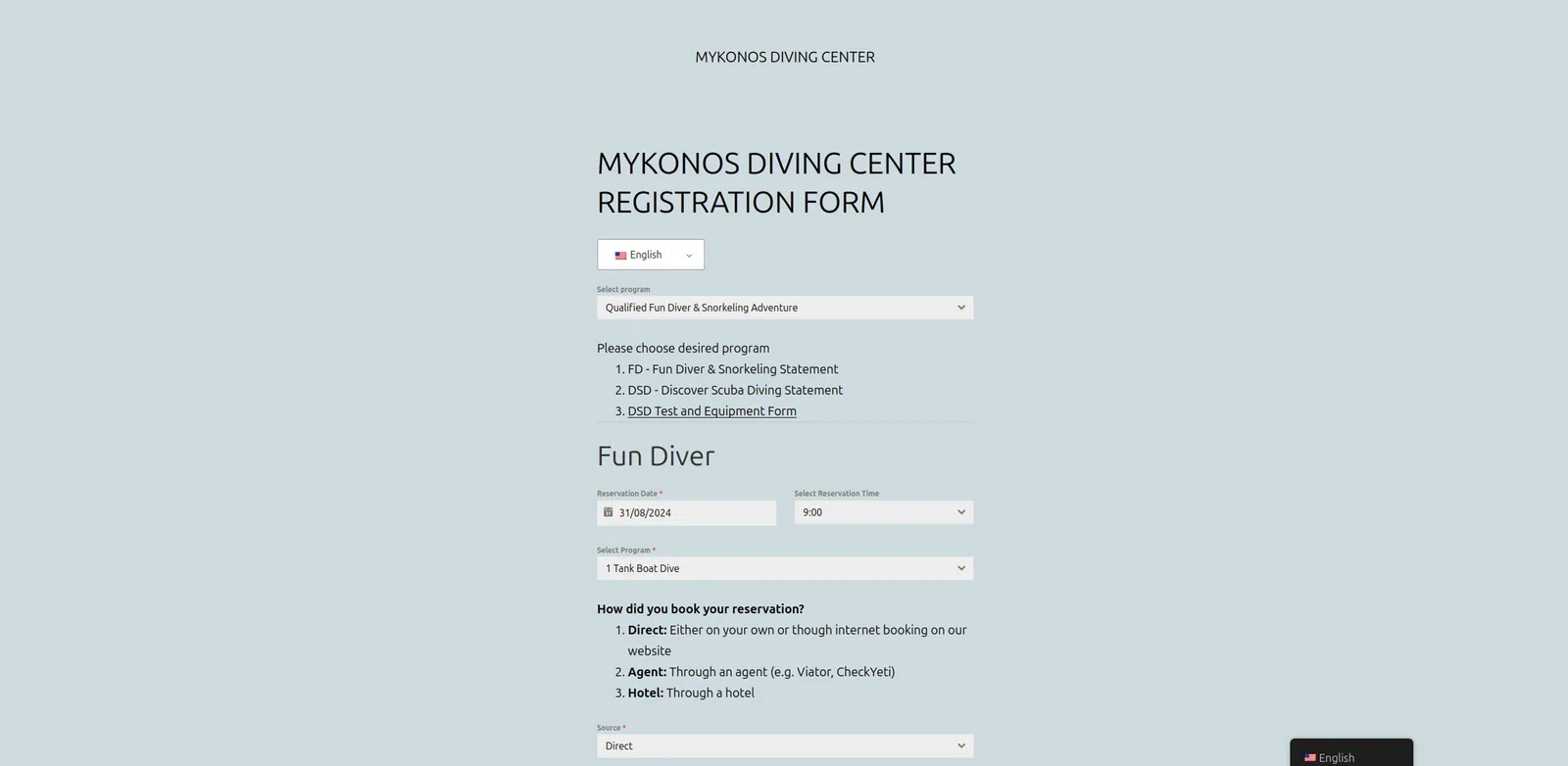 Mykonos Diving CenterRegistration and waivers signed on the customer's own phone
On the clinical side, the KlinikiMitera system holds patient and doctor records, appointments and procedure types, suppliers and stock, and income and expenses in one place — the kind of record the insurance paperwork should be generated from.
A note on responsibility
Medical forms, translations and the data behind them carry more weight than a booking form. Have translations of medical questions checked by a qualified person, keep patient data secure, and confirm with your adviser what records you must keep and for how long.
The honest version
A small practice that sees a few tourists a week manages fine with a printed form in English. A centre with a queue out of the door every August morning is losing hours at reception that should be spent on patients. Tell us what your August looks like — ideally in October.